Showing posts with label BTGG series. Show all posts

Monday, October 24, 2011

Beyond the Girl Gamer 3.1: Box it Up

Beyond the Girl Gamer: Introduction | 1.1 | 1.2 | 1.3 | 1.4 | 2.1 | 2.2
-------------------------------------------------------------------------------------
 
[This post is very image-heavy and so much of it is behind a jump.]

The discussion so far, over the last six months or so, has focused on what we see inside games: how the characters, both player and non-player, are designed; how the characters comport themselves; how the scenery of the narrative world is arranged for the male gaze; that the scenery of the world is, in fact, arranged; and how so many of the game worlds we visit use the same tropes to tell the same stories with the same kind of gender problems built into them.

The umbrella of "games, gaming, and gamer culture," though, goes well beyond the in-game, narrative, digital worlds.  Arguably, the biggest and most persistent problems we face aren't in the text, but rather, are wrapped around it.  And so we reach the third bucket of this series: marketing.

We've looked at the existence of the Chainmail Bikini trope before (1.2), but the problems of female characters in game marketing are bigger than, well, boobs.  Broken down, we're presented with two major areas of concern: the invisibility of non-sexualized female characters in marketing art, and the over-visibility of minor female characters just for the sex appeal.

A huge number of games do this.  After thinking of some on my own, I put the question to Twitter and received another few dozen suggestions in the first hour.  Sadly, there's no shortage of examples.

Wednesday, August 10, 2011

Beyond the Girl Gamer 2.2: We all live in a...

Beyond the Girl Gamer: Introduction | 1.1 | 1.2 | 1.3 | 1.4 | 2.1  -------------------------------------------------------------------------------

There are a lot of dead women in L. A. Noire.  The entire Homicide Desk sequence of the game is devoted to finding murdered broads, in fact.  It seems Los Angeles is just teeming with men who seem likely to strangle their girlfriends and wives, and that drunken dames are just leaping from bars left and right, waiting to be gruesome victims.

I am more okay with this than you would expect.

The casual racism and misogyny in L.A. Noire are never* gratuitous and might, in fact, be mitigated, as compared to some of the realities of the time.  This game strives, at its core, to be representational art.  Team Bondi / Rockstar went to an extraordinary amount of effort to recreate Los Angeles circa 1947 with as much detail and fidelity as possible.  The buildings, the streets, and the fashions are all as close to authentic as the developers could manage -- and so, too, are the attitudes.  Even the cases themselves, in classic Law and Order style, are drawn from actual historical events. 


There's actually a reason for photographing a woman's body close-up like an object, this time.

L. A. Noire is meant to represent faithfully a specific historical era, and it is meant to re-create faithfully (in spirit, at least) a specific art form -- the film noir -- that sprang from the same historical era.  Whether or not it succeeds at anything is a matter for debate, but no-one can argue that our current notions of race and gender equality applied 64 years ago, because they didn't.  We may still have miles to go, in search of a truly equal society, but the strides taken over the course of the 20th century cannot be overlooked.

And in fact, the game is based on the notion that its audience have, indeed, come through the 20th century understanding that violence against women is bad.  The designers count on the player having a certain reaction to the cases Cole Phelps is called upon to solve and to the story of Cole Phelps himself.  The intentional anachronism in the game is that 1947 Los Angeles is being measured against 2011 mores.

The playability of L. A. Noire relies on the difference between "contains" and "condones."  The space in time, and the space in cultural evolution over those decades, are a required baseline for understanding the game's subtext.  We are meant to understand that a character's attitude toward non-white citizens, or his attitude toward women, is part of the story of this character.  And we are meant to understand that rudeness and cruelty are signals: a cop's brushing off "dames" and insisting he have his way are signs to us within the context of the narrative that this man is A Problem.

Roy Earle is, how shall we say?  A world-class asshole.

That is the defense I can mount of visible racism and sexism in a game world: sometimes, it really does tell a story.  But having provided this "it's okay" discussion of L. A. Noire standing how it does, and having its own merits, we now need to ask the uncomfortable questions.  Highest among them is this: why is this the story we always tell?

Gaming has the potential to be anything.  A completely digital, completely constructed world can be anyplace we choose in time and in space, with avatars that look like anything and anyone.  We can inhabit settings as far-flung as the human imagination can conjure.  So given that a true historical drama is going to need to confront the unpleasantries of history -- why are we always plumbing the same histories?

Moreover, when we do plumb these same histories, we're willing to rely on an audience having a 21st-century understanding of civilization -- but we're unwilling ever to directly comment on those changes.  The periphery and the subtext are as close as we ever get.  Thus, even when serious problems are justifiable in the context of the narrative, we're still left with our same challenge from chapter 2.1: this game and this world are an artificial construct, entirely built for modern consumption, and we must filter it through the lenses of our current understanding.

For all that we can tell any story in a game, usually our western-developed stories -- of all play-type genres -- tend to be set in one of a few archetypal worlds:
  • High fantasy
  • Low fantasy
  • Space opera style science fiction
  • Near-term science fiction
  • Modern urban (Grand Theft Auto, Heavy Rain)
  • Fictionalized History (Red Dead Redemption, L.A. Noire)
  • Modern Military or Military-esque (Tom Clancy games, Modern Warfare, Battlefield 2)
  • Historical Military or Military-esque (every WWII game ever)
There are more, and obviously, these genre-classification walls aren't absolute, but I think they are the biggest buckets and manage to catch a hefty percentage of narrative games.  (Some games arguably combine world-types, as well.)

As in the case of L. A. Noire above, some of our game-world types do operate, by necessity, within the constraints of real-world historical rules.  If I were to play a World War II-era military game, I certainly wouldn't except to have women infantry among my units!  Nor would I expect to find women among my ranks if I were arranging pixelated knights Templar around a digital Jerusalem.

But historically-themed games are not, generally, among the worst offenders.  (Indeed, the Assassin's Creed franchise handles women in a plausibly-recreated renaissance Florence and Rome better than I would have expected.)  The bigger problem, instead, shows up in our most fictional universes. Gender roles, expectations, and stereotypes common to our history and to our present-day worlds have this amazing way of persisting through worlds that are fully constructed, have never existed, and are not ours at all.

While I was working on this piece, a deeply relevant essay appeared at the Border House.  In The Skyhook Society, Quinnae describes this phenomenon:

It is hardly groundbreaking at this point to say that the social worlds painted in many video games and other fantasy environments tend to be based on politically charged ideas about gender, race, and so forth. Despite being wildly fantastic or surreal they are, just as often, presenting the player or the reader with a social world that is depressingly familiar. A world where the humans are white, where the power holders are men, where heterosexuality remains compulsory, where any sort of trans-ness is not even on the horizon; in other words a world with very familiar relations of ruling.

She goes on to describe how the deep-seated and often unexamined need to replicate real-world power structures in fantasy worlds can render them structurally incoherent.  The core of her argument is a call for more thought put into the construction of gaming worlds, and less "default" behavior in general.

Even a game that has some excellent tendencies within, in terms of race and gender, can fall down in its universe construction.  While taking on the universe from the deck of the Normandy, has Commander Shepard ever met a female salarian?  (No.)  What about a female turian?  (No.)  And of course no female krogan.

"There are reasons," one argues.  "The salarian matriarchy system!  The genophage!  Well, Garrus used to have a turian girlfriend!"

Those aren't reasons. Those are in-character explanations for a design choice that a team at BioWare consciously or unconsciously made.  Humans, in the future, do indeed come in an array of racial options, and in both male and female versions, but with only one exception (the quarians), this ability to extend the imagination on-screen apparently only covers the human race.  Well, except for when you can come up with an entire race of fictional female hotties.

Justicar Samara, older than the city of Boston, will kill you with her cleavage.

In general, though, I feel the most structurally incoherent societies we see in geekdom are in our fantasy worlds.  This is our sword-and-sorcery plane, our modern nerdery made incarnate.  Our RPGs pretty much all take place here (indeed, the fantasy setting tends to be one of the unspoken markers of the genre).  The high fantasy universe is easy to mock because it's so ubiquitous.  Post-Tolkien and post-Gygax, we're all familiar with the tropes of orcs, elves, and a version of the British middle ages that never was.

A game can include female characters galore, and yet still find itself an example of incoherent world-building that doesn't take gender or sex into account in any way.  Divine Divinity and Divinity II are guilty of this: you can create a female Divine in the first game and name her anything you like, yet by its sequel, the hero of the first game is canonized as Lucian, a goody-two-shoes of a man if ever there was one.  The first game mainly portrays female NPCs as servants, nobles, locals, or witches -- and though not ideal, this is at least theoretically consistent.  By the second, nearly all groups, factions, and character types are a fairly hefty gender mix.  Men and women both guard town walls, or oppose you with malice (i.e. swords), or are dungeon bosses.  And yet women who get lines or quest segments are still mostly there to be plot devices, rather than to be characters with agency.  Your player character can be female, and yet nearly the entire game is designed around the responses of a male player character.  Simply put, the player can't afford to think about any of it too long, because none of it makes sense on examination.

But the Divinity games really aren't about deep storytelling; they're about getting an awesome weapon and some awesome skills and slaughtering orcs and trolls 'cause they're there.  Fair enough.  On the other hand, Dragon Age is indeed about a deep narrative, and a carefully built world. In the interest of full and honest disclosure: I still haven't been able to make myself play Dragon Age: Origins.  I started to and got bogged down in gameplay mechanics that I strongly dislike.  But Kris Ligman has played it, thoroughly.

In all fairness, most characters, even the ladies, wear way more than she does.

In a really solid piece about this kind of incoherent society, Ligman gripes about half-thought-through world-building, as it applies to class.  Her character of choice was a dwarf, a member of a despised underclass.  The player character, of course, rises to fame and power and general badassery, because that's the game we play.  It's what RPGs are for.  But although she intentionally created a very specific kind of character, the game failed to follow through on any promise of coherent recognition:

No one cares where I’m from, only that I look damned heroic right now.   ... [T]hough several game narratives exhibit an awareness of class, race, and the intersections of those two, the games themselves as systems display an exasperatingly predictable upper middle class image of social mobility, reliant upon fantasies of self-made wealth achieved at the expense of others and the local ecosystem.
Although she's writing about the incoherence of class markers, the truth persists with all out-of-"norm" characterizations in most games.  The NPCs are perhaps the result of a coin toss, but they all behave and are written in a way that results in world structures that don't hold up, or that show a lack of imagination.

The culture of medieval Britain was indeed rigid in a certain way.  So was Rome, or the Tang Dynasty.  So is 21st century Manhattan, or19th century Paris.  But any world in a game is none of these places.  Any world in a game is an intentional, theoretically thoughtful construction by a 21st century team of writers, artists, and coders.  So why do these fictional worlds keep clinging to real-world biases?

The long and the short of it all is, I can only second Quinnae's challenge to game designers (and in fact to all creators of fiction):

Ask yourself critical questions about the division of labour, ethnicity, and gender. Ask yourself if heterosexuality needs to operate in your world exactly the same way it operates in ours. Ask yourself if your culture needs to be an appropriating parody of a human culture, or if every human in your world must be white. Demand of yourself explanations for these things. What you will be weaving in the process is a proper social structure that can hold up your world, one that will almost automatically make it notably different from our own. It will put your world’s various power dynamics at a tantalising remove from our own, making it feel all the more creatively alien and unique. The most interesting fantasy worlds I’ve seen are ones that do make some kind of accounting for their social systems, that possess identifiable structure, rather than unsupported mirroring of the real world.

---------------------------------------------

Related reading:  Tanner Higgin, The Trap of Representation


*Caveat: we are, at present, only halfway through the Vice desk and still have probably a third of the game to go, if not slightly more.  If some crap does get gratuitous as the game concludes, you can rest assured that I will have a great deal to say about it.

Sunday, May 22, 2011

Beyond the Girl Gamer 2.1: The System of the Worlds

Beyond the Girl Gamer: Introduction | 1.1 | 1.2 | 1.3 | 1.4
-----------------------------------------------------------------------

So far, we've talked a lot about characters: our protagonists, antagonists, and supporting casts.  Character design drives our gaming, to a huge extent, but it's just one part of the overall element of game writing, which is what we're going to examine in chapter 2 of this series.  And we're going to delve into some actual critical theory in order to do that.

Our transition, though, begins still with character to some degree, and the concept of the "coin flip" character in gaming.  The concept is this: you need to determine something binary (a male or female character), so you flip the coin to see if it comes up heads or tails and run with it.

I think of Chell, in Portal and Portal 2, as a coin flip character.  The game is completely, 100% unaffected by the PC gender.  In this case, the coin came up female.  In Half-Life (2) there doesn't need to be a particular reason that Gordon Freeman is male.  Valve probably didn't flip the coin, but when you do -- sometimes it still comes up heads.  There doesn't need to be a particular reason that Shepard of Mass Effect (2) is male; in the future, space marines come in all types.  And so BioWare has given us this most basic choice: to flip that coin ourselves.

This doesn't usually happen.  Not only does the coin not land on non-male, it also doesn't land on non-white or non-straight.  The straight white male is still an absolute default, and in the context of most games (and movies, and books, and...) any deviation has a distinct narrative presence.  There's a reason that THIS character has to be black, or female, but there's never a reason that a player character has to be a straight white dude.  He just is.  It's the unquestioned default.  (This is why the default Shepard is so boring to me.  He's generic, and there are thousands like him.)

Contrary to what some alarmists believe of all feminist thinkers, I agree that there's no good reason to make a specific man's story about a woman.  Sometimes you're telling the story of a man's life and that is totally cool.  If you are writing a historically accurate game about a knight in 12th century France well then by god, I expect him to dude up the joint in the manliest possible way, and I expect most of the powerful figures in his story also to be men, especially among the warrior and clergy classes. 

But when are our games ever historically accurate*?

Games take place in worlds of our own creation.  Law and Order can purport to represent New York City as it is.  We cannot claim to be representing Ferelden as it is, because there never was such a place outside of a writer's imagination.

But in fact, even when claiming to represent a place, like modern Manhattan, as it actually exists, all fictional media fail to some degree or other.  The story being told is always one that was written by a human, and one that is being filmed and edited by a human.   In any TV show, movie, or game the world, as we see it, is entirely constructed.  Someone came up with it, and made it, and everything in it is intentional.  Even the "reality" that bumps in (as in traffic on the street in Law and Order) is a deliberate choice -- someone chose not to use a soundstage, not to close that street, and not to use a different, traffic-free, take.

This basic idea -- that we are not ever watching reality, but are looking at a construct -- is at the core of all film studies and so it is in one of my old introductory film textbooks that I looked for the best description:
 "What film reviews almost always evade is one of the few realities of film itself, that it is an artificial construct, something made in a particular way for specific purposes, and that plot or story of a film is a function of this construction, not its first principle." 
Robert Kolker, Film, Form, and Culture, 2nd ed (2002). (p. xvii)
Rephrased, the most important concept to understand in early Film Studies is this: the characters are never the creators of the story's events.  Han and Leia don't flirt with each other due to mutual attraction; they flirt with each other because a script-writer called for it and a director put it on camera.  The story that you see unfolding is an element of the film you are watching.  The same is true of gaming.

Further, the sum total of everything put into the image you're looking at, in film, is called mise en scène (because the French had the first crack at written film theory).  It's basically the idea that lighting, set design, and every other visual in a scene help tell your story.  The textbook example (literally, it's in every introductory film theory and film history book out there) is the 1920 German film The Cabinet of Dr. Caligari.  One look at a famous shot and it becomes obvious why:

91 years and thousands of films later, it's still creepy.

For us, and for our purposes going forward, the really important, unbelievably crucial point is this: Game worlds are 100% digital and therefore, 100% constructed.  Nothing is simply "found" and nothing is incidental or accidental.  Every pixel is deliberate and intentional -- even though those pixels can also be utterly thoughtless.  "Created" is not the same as "carefully created."

Let's take ourselves back to mise-en-scène for a moment.  Can anyone argue that this environment, shown below, is not absolutely as carefully crafted, and as essential to the story, as in any film?  It has, in fact, been argued that the real main character of Bioshock is the underwater city of Rapture, and there's something to be said for that.

It's like a murderous and awkward Renaissance painting in here.
But the fun part is, it's not just the modern, cinematic games that use this concept so crucially.  I think the first game where I became really aware of the environment beyond my character as essential was Super Mario Brothers 3.


Yes, this game.

In SMB3, the sun itself pulls right out of the background art and becomes an enemy.  All of the brick types work differently (two are shown here).  Enemies, fatal to the player character, come popping out of the environment regularly (the plant in the image above being just one example).  And in levels comprised of large, scenic blocks (World 1, Level 1 for starters), the player can actually drop behind the white ones.  Literally, the player can take herself behind the scenes of the video game's environment -- but only at certain times.

So when we're looking at a game, and analyzing it in any way, the crucial thing is for us to remember that everything is created.  We need to remember to step outside of the narrative and to repeatedly ask how and why the designers of the game chose to frame it or to make it progress in the way they did.  If we're asking, "Why does Naomi Hunter wear her shirt unbuttoned so far down in the lab?" it's the wrong question.  We should be asking, "Why is this world designed in such a way that our scientist is an attractive female who keeps her shirt unbuttoned so low while working?"  If Nathan Drake bumps his head going into a tunnel, the question is not, "Why is he so clumsy?" but instead, "Why did the game's creators decide this tunnel was two inches shorter than their protagonist?" or, "What are we meant to learn about this character through seeing this collision?"

Sometimes, when we're asking these questions from outside of the narrative, the answers will be mundane.  "Budget restrictions" or "tight deadline" are probably the most common answers, across all games and studios.  If we're asking why the Courier in Fallout: New Vegas is silent, that's probably the answer we'll get (not enough time and money in the world to make recording every possible line a worthwhile design choice).

But sometimes, we'll find, on asking, that no-one thought carefully about a design choice one way or the other, and instead just made an assumption based on his or her own cultural defaults.  Those are the most interesting answers.  From these moments, we learn more about the culture producing the game -- we learn more about ourselves, and about what will need to change in the future if we want different games.  From the same text I cited earlier:
"The idea of culture as text means, first, that culture is not nature; it is made by people in history for conscious or even unconscious reasons, the product of all they think and do.  Even the unconscious or semiconscious acts of our daily lives can, when observed and analyzed, be understood as sets of coherent acts and be seen to interact with each other.  These acts, beliefs, and practices, along with the artifacts they produce ... have meaning.  They can be read and understood.
Robert Kolker, Film, Form, and Culture, 2nd ed (2002). (p. 116)

Here in the real world where we live, everyone is allowed to be incidental.  People come and go, because they're people.  The main character of my life is a straight white woman (and I am she).  When I am at work, if I am taking the elevator from the ground floor to the 10th, and the doors open on 6, the odds are about 50/50 whether a man or a woman will board.  Similarly, in my workplace in particular, the odds are about 50/50 that the person boarding would be white or a racial minority, and about 1 in 6 that the person boarding would identify as non-straight.  I would expect and understand any of these, because I move in a world full of people.  If I am taking the Metro home, and the doors open at Union Station, I would expect an even bigger range of diversity in boarding passengers.

If Solid Snake were in an elevator going up ten stories, and the doors opened on 6, there would have to be a story-driven reason for a woman to board.  (In fact, there would need to be a narrative reason for the doors to open at all.)  Snake moves in a world of ideas, concepts, and tropes, not in a world full of people.  We say "truth is stranger than fiction," because we expect fiction to make sense.  But what kind of sense?  Does fiction deserve as much random diversity as reality has?

And so, in the next chapter: what spaces do our characters live in and why do our characters live in these spaces, when they could be anywhere?

*Your Critic will not have a chance to play L.A. Noire until later this summer, so if this one is the exception that proves the rhetorical question, well, try not to leave spoilers.

Wednesday, May 11, 2011

Beyond the Girl Gamer 1.4: Best Supporting Actress

Beyond the Girl Gamer: Introduction | 1.1 | 1.2 | 1.3
--------------------------------------

In this series, so far the character discussion has focused on protagonists and player characters -- our heroes, as it were. But the worlds in which we game are teeming with sidekicks, companions, antagonists, villains, and other NPCs.

And when I say teeming, I mean it.  First I sat down to list off "just a few," but even limiting myself only to games I personally have played in the last two years, I immediately came up with: GLaDOS, The Boss, Naomi Hunter, Liara T'Soni, Jack, Miranda Lawson, Dr. Chakwas, Rose of Sharon Cassidy, Veronica Santangelo, Christine Royce, Chloe Frazer, Elena Fisher, Lucy Stillman, and Madison Paige.  That batch was just my immediate first thought -- clearly, there are hundreds or thousands more we could discuss.

Cass, Dr. Chakwas, Chloe, Elena, GLaDOS, Jack, Liara, Lucy, Madison, Miranda, Naomi, and Veronica.

There's more than a bit of variety in types there, to be sure.  Some of those characters are presented in a deliberately sexualized way; many, interestingly, are not.  Some of these characters defy stereotypes; some reinforce them.  (And despite the variety in their names, there's not much racial diversity in this collage, nor in the characters I named but didn't grab images of.)  But what they have in common is that most of them do actually get to be characters.  We don't know as much about them as we hope to know about our player characters, but many of them are at least given histories as plausible and deep as those of the main characters.

What I want to see in a female member of the supporting cast is a woman who helps to serve the story by what she does, rather than by what is done to her.  And let's face it: fiction (not just gaming, but also literature, television, and film) is chock-full of women whose purpose as a plot device is to be victimized.  This is where we get the Women in Refrigerators trope.

As with many of the issues of representation in media, the issue is more an aggregate one than an individual one.  One story of a man avenging his raped and murdered wife would be one thing, but hundreds of stories about a man avenging a raped and murdered woman add up to another thing entirely.  The same applies across all problematic, over-used tropes: the incompetent father, the black criminal, the Spanish-speaking housemaid...  By itself, any of these stories could stand as a story of one incompetent man, or one victimized woman -- but together, they add up to an ugly and problematic cultural picture.

One of the best things about Portal (the first) is that GLaDOS serves the plot entirely, 100% by what she does.  Nothing has been done to her and she is not in any way a victim: she is the guide and antagonist, full stop.  On the other hand, by Portal 2 this has changed.  Her motivation is now based on something that was done to her in the first game: she's pretty damn pissed off about you having dismantled her in the boss fight.  But her "murder" at the end of Portal isn't exactly what I would call "victimization" and even through being transformed into a potato she maintains her vindictive core.  Whichever way you look at it, circumstances force her into a passive role, rather than an active one, and that is indeed where so many female characters find themselves.

For the most frustrating example of passivity (in the "what is done to her" sense) in modern gaming, I nominate Madison Paige of Heavy Rain.

Oh, Madison.

You first meet her while she is asleep in her apartment, in her underwear.  She putters around with insomnia for a while (where the player can look at her digs and even have her take a shower).  Then she's suddenly attacked by a team of shadowy men assaulting her, a (surprise, dream!) sequence that always ends in her capture and death.

This is your first impression of Madison Paige.  Not with her family (like Ethan Mars) or at work (like Norman Jayden or Scott Shelby), but inexplicably the victim of a violent physical attack.

Further scenes with Madison have her escaping a horrific serial killer with some pretty damn creepy rapist overtones, removing half her clothes to get access to a slumlord, removing the other half of her clothes at the slumlord's violent insistence, playing nursemaid to the male lead at least twice, spontaneous sex with the male lead, and being trapped in a burning apartment (although there "woman in refrigerator" is actually the non-death answer).

And that's if you do the "good" Madison who survives the whole game as a character in play with all the "right" choices: boobs, nursing, boobs, nursing, ass, sex, boobs, and repeated victim or near-victim of graphic, horrible, sexualized violence and attempted rape.  Even my extremely mild-mannered, no-strong-words, no-drinking, no-swearing, even-tempered father-in-law remarked aloud that the best (and only memorable) thing about her was her rear end, and that the only understanding he got from her scenes was that she was fun to watch.  And I think that's about all Quantic Dream intended.

I recently wrote about the role and presentation of some female companion characters in Mass Effect 2.  I had wanted to write that first so I wouldn't repeat myself here -- so if you're curious what I think about Miranda's rear or Jack's outfit, look there.  In terms of writing, though, I do give BioWare full credit: all members of your party seem to be roughly equally developed.  They each have a loyalty mission (most of which seem to involve some serious daddy issues) and they each have roughly the same amount to say when you're just kicking around the Normandy.  Although some of their physical assets may be overdeveloped (and isn't that always the way), their stories at least aren't underdeveloped, at least as compared to the male characters.

Not all female sidekicks get that level of development.  Elena Fisher of the Uncharted games is a journalist who's fairly kick-ass (and certainly competent) in her own right.  But she and other similar characters (Lucy in Assassin's Creed: Brotherhood leaps to mind) blend together by being underdeveloped.  I really would have loved a few more lines in Uncharted or especially Uncharted 2 just letting us know why Elena was around, and what she ever would have seen in Drake.  Her character was so close to being awesome that I really wish they'd taken a few extra steps and brought her farther to the front. (On the other hand, Uncharted 3 seems to be setting itself up with a prominent female villain, so I do look forward to writing more about this franchise at the end of the year.)

There's always so much going on in the supporting cast of a video game that sometimes it's hard to unpack all the steps that are involved.  Are there even any women?  If so, must their gender serve a specific narrative purpose or is it the "coin toss?"  If there are women, are they granted the same character status as men?  And how do they dress, walk, speak, and present themselves?  I've only mentioned the tiniest handful of games here, because I'm just one gamer and this is just one post.  There are thousands more we could discuss, some of which I would agree "do it right," and others... not so much.  (And I'm sure they'll come up in the comments.)

Next chapter: we transition to section 2, writing, by tackling the "coin toss," the default avatar, authorial presence, action, and intent, and examining the worlds in which our characters move.

Friday, May 6, 2011

Beyond the Girl Gamer 1.3: Perspective and Identification

Beyond the Girl Gamer: Introduction | 1.1 | 1.2
--------------------------------------------------

There's a kind of game character that's pre-defined for you, and you just play through his or her story.  He is Nathan Drake, Ezio, or Solid Snake; she is Lara Croft, April Ryan, or Samus Aran.  We've talked about some of those female leads before, in this series.

But then there's the other kind of character.  One where you pick your character's gender and looks, where you decide if he's a short white guy or if she's a tall Asian lady.  And we haven't talked about them, yet.  Being given choice in the kind of character we play can change how we identify with that character, and how we feel about that character.

There are also two different ways we see our characters in video games.  We are either looking at them (third person) or looking through them (first person).  And the way we do or don't see that character on screen can also change how we identify with that character, or how we feel about that character.

Choosing and seeing a character are two big elements in character identification; the third is hearing your character.  None of us heard Guybrush Threepwood in his first two outings, because as awesome as Dominic Armato is, the tech just wasn't there yet.  But we all heard April Ryan, and we all hear Nathan Drake.  In 2011, the choice of whether or not your player character speaks audibly is no longer a technical one, in an AAA game, but an artistic one.

And where so far many of the leading ladies featured in this series have come from older gaming titles, this post will finally bring us firmly into the 21st century.  The altered dynamics of player-chosen gender as well as of visual perspective have been a big thing in three (well, six) big games of the last few years:
  • Fallout 3 and Fallout: New Vegas
  • Mass Effect and Mass Effect 2
  • Portal and Portal 2
I have put rather a shocking number of hours into those two Fallout games since 2009.  Well over 100 hours into Fallout 3 and all its associated DLC, and about 90 so far into New Vegas (including Dead Money).

The Lone Wanderer and the Courier, the way I play, are always female.  The Courier looks a lot like me.  She shares my outlook and moral core, and she moves through conversations the way I personally would like to move through conversations.

In short, I move through the Mojave Wasteland, making decisions about the future fate of New Vegas and all its denizens.  Why?  Because Fallout: New Vegas is best played as a first-person game (although you can switch into third-person at any time), and the Courier is completely unvoiced.  As I read her dialogue, before I select the best option, I hear it -- I hear myself thinking through it and making a choice.  Thus, the Courier is as female as a character can get, because I'm female and strongly self-identify as such.

To other players, I imagine the Courier is thoroughly male or thoroughly genderqueer, because those players strongly self-identify as such, and are given a chance to fill in this character's shell with their own values and morals.

And then, in mute protagonists, there's Chell.  I've just recently written extensively about Portal 2, including spoilers, but with Chell the gist of it all begins from that "Holy crap, I'm a girl!!!" moment in the beginning of Portal.  That moment felt great -- and then it stopped being relevant, because the fact of the matter is, it's an entirely first-person game, unvoiced, and so I assume most players just put themselves in the protagonist's spring-loaded shoes and felt that they were dismantling GLaDOS. 

Portal 2 does a better job of reminding you consistently that you're represented in this space by a female body, with Wheatley and GLaDOS giving fairly constant references to "she" and "her" when describing you, and a high number of puzzle solutions requiring you to place portals in such a way that you can see yourself.  But the player not only remains unvoiced -- she also remains entirely mute.  There is no player dialogue; there are no dialogue options.  Indeed, there are no actual choices to be made, and so although it's great we're a girl and all... I know I felt "female" playing that game but I don't think one could say the same of all players.

Interestingly, the unvoiced first-person works both ways: despite the very explicit, defined player character in Bioshock being male, between plot exposition points I stopped thinking of him that way and simply perceived of myself as moving through Rapture.  Then again, female consumers -- of all media, books, games, movies, and TV -- are used to having to put themselves into the space of a male protagonist.  It's second nature at this point, after spending my childhood planning to grow up to be Robin Hood and Indiana Jones.

But there is one very notable game (franchise) out there right now where you have the choice of your player character's voice and appearance.  Commander Shepard (cosmic badass) is a fully voiced, third-person, completely fleshed-out character -- male or female depending on the player's choice.  Commander Shepard will have the same lines, the same attitude, the same behavior regardless of gender.

FemShep is notoriously awesome.  Female players love her.  Male players love her.  In the first Mass Effect game she was considered to be the superior character for voice acting reasons.   Go Make Me A Sandwich has rhapsodized on Shepard as female protagonist done right:

She never winds up playing second fiddle to her team members because in the end it’s all about helping her get the job done. And, ohmigod I can’t possibly articulate how much I love BioWare for this. Honestly, sitting right here I can’t name a single female video game character besides FemShep that is 1) not sexualized 2) in charge and 3) the main character.

And all of this is improved by the massive amounts of choice the player gets in deciding the fate of the universe. FemShep is a character whose decisions affect the entire galaxy, again not a role that you often see female characters in. And she gets to do all manner of epically awesome things. FemShep isn’t just a person – she’s a force of nature. So when people ask me what exactly it is that I do want in games? This. I want this. More of it. A lot more.

Interestingly, though, although I am protective of "my" Shepard and her perspective on galactic doom -- because obviously, that's totally how it happened, duh -- I don't relate to her the way I relate to an unvoiced player character (third-person or first-person).  She speaks with a clear voice that isn't mine, and her dialogue options are often constrained to things I would prefer not to say.  But that's a complaint for another day.

Character design and game design are informed by a lot of different technical needs and artistic wants from game to game -- there isn't a one-size-fits all solution, and nor should there be.  But FemShep stands out among modern game characters for being the very, very rare example of a third-person visualized, fully-voiced, true female lead character.  More often women are part of an ensemble cast (Final Fantasy XIII), or are left to the voice of the player (Fallout 3), or are completely invisible and completely mute (Portal).  Mass Effect does indeed stand out in the current crop of big-budget games.

Next chapter: We move from examining player characters into the supporting cast.

Monday, April 18, 2011

Beyond the Girl Gamer 1.2: The Chainmail Bikini

 Beyond the Girl Gamer: Intro | 1.1
---------------------------------

The long and the short of this piece is really pretty brief, because it's something we all know, and have known for years.  This post in the series exists because it has to, because I can't overlook something so egregious that we all know it internally:

Our female characters are nearly all overly sexualized.  And even when they might not be so bad in the context of a game itself, they're beyond awful in the marketing materials.

Rather than re-hashing several years' and decades' worth of discussion and argument here myself, I'm going to spare myself the pain of wheel-reinvention and link you all to someone who does have the data: Go Make Me a Sandwich.

The post that first brought me to that blog was an excellent breakdown of sexualized depicion in WoW galleries, by gender.  Hint: it's all T&A for the laydeez.  She also addresses the kinds of poses that seem to be de rigeur for the men in the room.

So really we know this happens.  This leaves us with two real questions:

1.) Why?  Why why why?

2.) Aren't there other good ways to sell and market a game?

Over and over, we hear "sex sells."  We hear that a bronze chestplate -- plate armor -- that covers the whole torso on a male avatar but only the breasts on a female avatar (or plate greaves, that cover the entirety of the legs on a male avatar but wears like a thong on a female avatar) does so because the men and boys who play the game just want to look at the bare girl skin.

Really?  I mean, really?  Do we think so little of gamers that not only do we assume that they're all straight men, but also that they all have the proclivities of an uncontrollable 13-year-old?

Everyone -- I mean, everyone -- in gaming has been discussing this for years.  We're smarter than this.  Valve has just recently knocked it out of the park on marketing a game with a female protagonist and a female antagonist.

So I'll leave you with just a sample of what some others have written on the topic:
And ten minutes or less on Google will bring you to at least a hundred articles, rants, and blog posts on the theme.  Some are better than others.  (I skipped the ones that referred to our protaginists as "sluts," for example.)

So in short: this happens.  It shouldn't.  And I don't even have the energy to do the comparisons between, say, Lara Croft and Nathan Drake.  To developers' credit, 2011-era Lara Croft is meant to be different from 1999-era Lara Croft.  But when heroes in similar games are Boobarella and Charming Schlub, I think the point is made.

Next segment: first-person vs. third-person and voiced vs. unvoiced characterizations, and the difference these make to the player in terms of gender and identification.

Tuesday, March 22, 2011

Beyond the Girl Gamer 1.1: Strength of Character

Beyond the Girl Gamer: Introduction
---------

During the "Females on Female Characters" panel at PAX East this year, something that's bugged me for a very long time came to the forefront.  Over and over, through the years, I've noticed that when we talk about "strong female characters," we don't define the term.  To some people, "strong" means only "butch."  To others, "strong" equates to "violent."  You can guess what I think of these equivalencies.

So when we're asking for a "strong female character," what do we really mean?

I asked some friends and strangers (both near me at PAX and on Twitter): "Who would you pick as an example of a real-life strong woman?" without context.  Who came up?

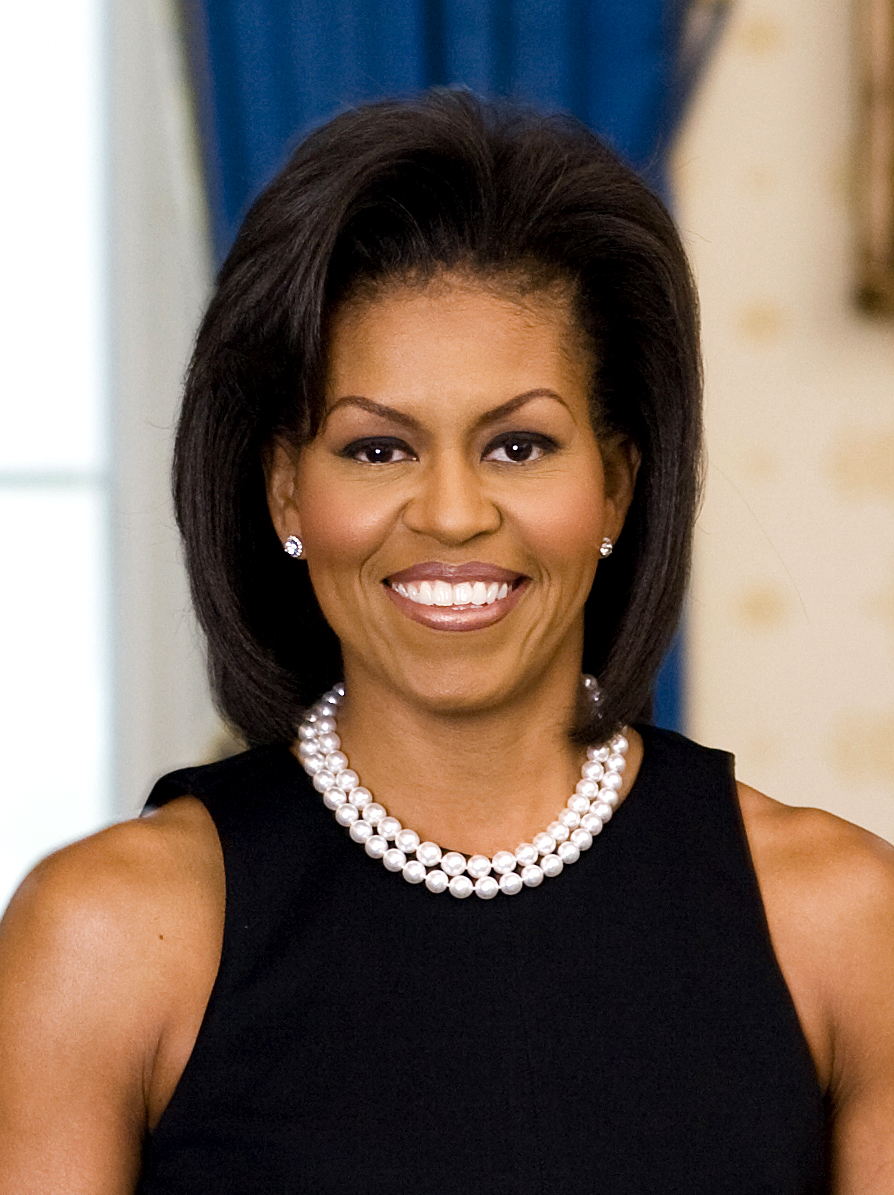
Hillary Clinton
Julia Child
Condoleezza Rice


Michelle Obama
Lady Gaga


Let's take a moment to notice a few things about these women.  Most of them are well over 30 and many are over 40 or 50 -- or at least were, when they came to public awareness.  (Not all are still with us.)  They are not all white -- although admittedly, not as diverse as would be ideal.  Some are known to be feminine.  Some are not.  But for the moment, the most important facet is this: although most of them are famous for kicking ass in the metaphorical sense, none of them are known for their physical fighting or shooting abilities.

Almost exclusively, these women have been at the center of their own lives, not only playing the hands they are dealt in a passive or reactive sense, but instead determining the courses of their own fates with active, determined steps.  All have contributed to the creation of their own destinies, in the face of obstacles both external and internal.  When made to work within disadvantageous systems, these women have have found ways to force the systems to change around them.  And if that's not strength itself, what is?

We have a tendency to equate propensity toward violence with strength in all video game characters, not just female ones, but it's especially glaring when looking at the women because it seems only women whose defining quality is the ability to shoot from the hip get included in the broader canon.  If you go around asking mainstream gaming (and Google), "Who are the strongest female characters in gaming?" you see:

Samus Aran (Metroid)
Bayonetta (Bayonetta)
Lara Croft (Tomb Raider)
The Boss (Metal Gear Solid 3)

(By the way, and not incidentally, while it took me 30 seconds or less to find the photos I used of the real-life women above, it took me a solid 20 minutes of Google work to come across a usable, forward-facing, non-porno, non-suggestive image of Lara Croft -- and Samus was only marginally easier.)

While gaming in general does not rely exclusively upon violence, a huge category of narrative, fully fleshed-out gaming does.  The competitive multiplayer sphere obviously relies on kills and captures, but despite our general agreement that gaming doesn't cause violence, pretty much every AAA title to come out in recent times either portrays or simulates violence.

All hope, however, is not lost.  Although the heyday of the adventure game has come and gone (and may be coming again, in hybrid titles and new forms), some of our most memorable heroines, to this day, have been known for their stories and problem-solving, not their aim:

Kate Walker (Syberia)

April Ryan (The Longest Journey)

Zoe Castillo (Dreamfall)

This other collection of characters is made of girls and women who can face their fears, and not just the fears of things that go bump in the night: they are strong.  (And I've written about April and Zoe before.)  Female characters who can think through solutions, who can face down systems stacked against them, who can, indeed, clobber a monster if there's no other option: that's how I'm inclined to define strength.

I am aware that there are two glaring absences here.  One is the entire sphere of Japanese-developed gaming.  "What about Lightning and Fang?  What about Yuna, and Terra?"  The answer, I'm afraid, is painfully blunt and dead-end: I almost never enjoy playing JRPGs, and as a result, am most assuredly not an expert in their construction.  I'm a member of and a consumer of primarily Western-generated culture, and I know when to stop talking.  Japanese games are not my forte, and I don't have time to play them all to get caught up for this series.  I think they have a different set of positive portrayal / negative culture problems than Western games do. Not necessarily better or worse, but different.  Not all characters there are violent, even when there's fighting involved, and some are strong.

The other omission I am sure to hear about?  She is called Commander Shepard.  Or she is called a Grey Warden, or Hawke, or the Lone Wanderer, or the Courier.  That's because these women or men are another topic.  The personalities of those characters are driven by the choices and moral preferences of the players; the characters who I have chosen to discuss above are fixed in space and time, as it were.  Their stories are already told and it is merely our job to follow them; their games are as on-rails as it gets.  Looking at the character of player-definable leads is a trickier, and more nuanced task, as no two players are likely to portray the exact same character.

Also I can't talk Mass Effect's supporting cast yet because I haven't finished it, but I have a friend all over that beat.

Next in the series: we look at (ha) the sexualization of female characters.

Monday, March 7, 2011

Beyond the Girl Gamer: Introduction

I've mentioned several times that three of us submitted a panel application to PAX East 2011.  They didn't take the panel, and I don't know that I was expecting them to.  But I liked what we came up with, and so it's going to be a year-long series.

When we sat down to think about what mattered, and where we felt the issues regarding gender in gaming were, we came up with an outline and a focus.  Distilled down to its absolute shortest one-liner format, our three-page outline looks like this:

Focus: The role of women and girls as players, characters, and participants in games and gamer culture

Areas of Discussion:
  • Characters (male and female, and how they relate) in games
  • Writing (gender roles, why they persist, language used) in games
  • Marketing (writing about, images used, language chosen) of games
  • Gamer culture (web presence, online multiplayer, stereotypes)
  • And of course, knowing all this -- where do we go from here?
There are many underlying, foundational issues to the problem of gender in gaming, and they're basically summed up as why we still have feminism.  And a great deal of that is beyond the scope of me or of this blog.  There are other places to take that.

But for us, we can agree: there are significant problems with the way female video game characters are written.  There are huge problems with the graphical way in which female video game characters are portrayed.  Writing of games has issues with women, and writing about games is, arguably, even worse.  Games are marketed to a mythical monolithic 15-24 year old white male who may not even exist, and gamer culture has rallied around what that stereotypical marketing figure is supposed to prefer.

The "girl gamer" isn't often a girl (in the case of Your Critic, she's 30 and a married, employed adult), but she is a gamer.  And we're going to start, next in the series, by examining available female characters, past and present.

Monday, February 28, 2011

Busy Critic

Housekeeping info:

1.) Your Critic and her spouse, as many gamers do, have acquired a cat.  He is, naturally, the best cat in the whole wide world; doubly so as he is named Guybrush.

 Guybrush Ulysses Threepwood Cox, Mighty Pirate Cat.

2.) The PAX East 2011 schedule is out and ready.  I've been putting together my schedule, and if all goes well (i.e. if the lines aren't too long), I'll be at the following (as well as probably some others):
  • Friday, 10:30: Jane McGonigal Keynote
  • Friday, 3:30: What The Heck Is A Community Manager?
  • Friday, 6:30: Game Design is Mind Control
  • Saturday, 3:00: Females on Female Characters
  • Saturday, 6:30: The "Other" Us: If We're All Gamers, Does Our Gender Matter?
  • Sunday, 10:00: Girls' Meetup
  • Sunday, 12:00: One of Us
I was pleased to find that in fact there is not a panel on gender issues in gaming; there are three!  As this is Your Critic's beat, I am most pleased and hope to come home with interesting insights.  Also with the live-blogging, and you can follow my Twitter feed.  Which, I am forced to admit, may be more along the lines of "I am by the Nintendo booth where are the rest of you?" than anything entertaining.

3.) Our year-long "Beyond the Girl Gamer" series is starting this week.  In that vein, there is a new site out there which has gotten a lot of attention in the last two days: The Mary Sue.  I'm not sure how I feel about it really, and I suppose it's too early for judgement.  I do think their "why this, why now" statement has a few ideas worth hearing, though:
We know the point at which you would be satisfied is to just be able to geek out with all geeks, of any gender, without feeling like your femininity is front and center for scrutiny.  To not feel like you have to work harder than guys to prove that you’re genuinely into geek culture. We want simple things, like to be able to visit a comic book store without feeling out of place.  To be able to buy a video game without getting the sense that the cashier thinks we’re buying it for someone else.
But mainly we just want to be able to pursue our hobbies with the other people who share them.  We want to play with the boys.
So there are two reasons why there should be more out there devoted specifically to the female geek.
Because even if we want to play with the boys, there is a value to having our own space.
 So there's that.  We'll see.  They seem to have good intentions at least.

4.) We haven't had an Open Thread in a while.  The last one was fun.  So: get to it, if you like!

P.S. The meditation on genre and adventure games is still coming.  It's long, convoluted, and problematic, and Your Critic has been required to do actual paid work at her day job lately.  When it's not 2100 words of ugly, it's coming here.